Why lighting is not something to sort out later
Lighting for home refurbs needs to be planned earlier than you think
In the first post in this series, I wrote about why home refurbs become overwhelming so quickly. Often, it is not the big decisions that cause the most stress, but the smaller decisions that creep in sideways and suddenly need answering before anyone feels quite ready for them.
Lighting is a perfect example of this.
Lighting, when designed and implemented well, is one of those things that can quietly transform a room, but it is also one of the things that homeowners often leave far too late to think about.
Lighting design can feel like something to come back to once the main decisions are out of the way. The kitchen. The bathroom. The flooring. The tiles. The builder’s quote. All the big, loud things that demand attention first.
But many homeowners who are refurbishing for the first time do not realise that after demolition comes first fix.
First fix means the running of new cables for electricity and pipes for gas and plumbing. This is where all the messy works take place. It also means that the electrician needs to know very early on exactly where the lights are going. Ideally, they also need to know what type of fixture is being installed, so they can plan how long the work will take in their diary.
So ideally, the layouts are finalised.
And at that point, the conversation with the electrician is not simply, “Which lovely wall light do you like?” It is more likely to be:
- Do you want wall lights in the master bedroom?
- How many circuits are needed in the master ensuite?
- Where are the switches in the hallway?
- Are any circuits required to be two-way or even three-way?
- Will the pendant over the island be on the same circuit as the under-cabinet LED strip lighting?
- Is there lighting inside the home office joinery?
- What fixtures have been ordered and which items still need to be confirmed?
- Will the dining table stay in that exact position?
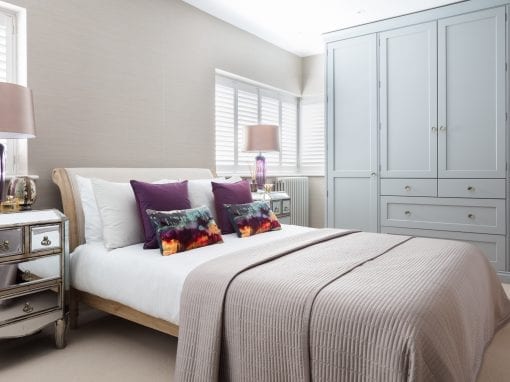
You may not need to have chosen every exact fitting at first fix stage, but you do need to have thought about position, function and atmosphere. Bedside wall lights need to relate to the bed and the headboard, especially if the headboard is a focal feature.
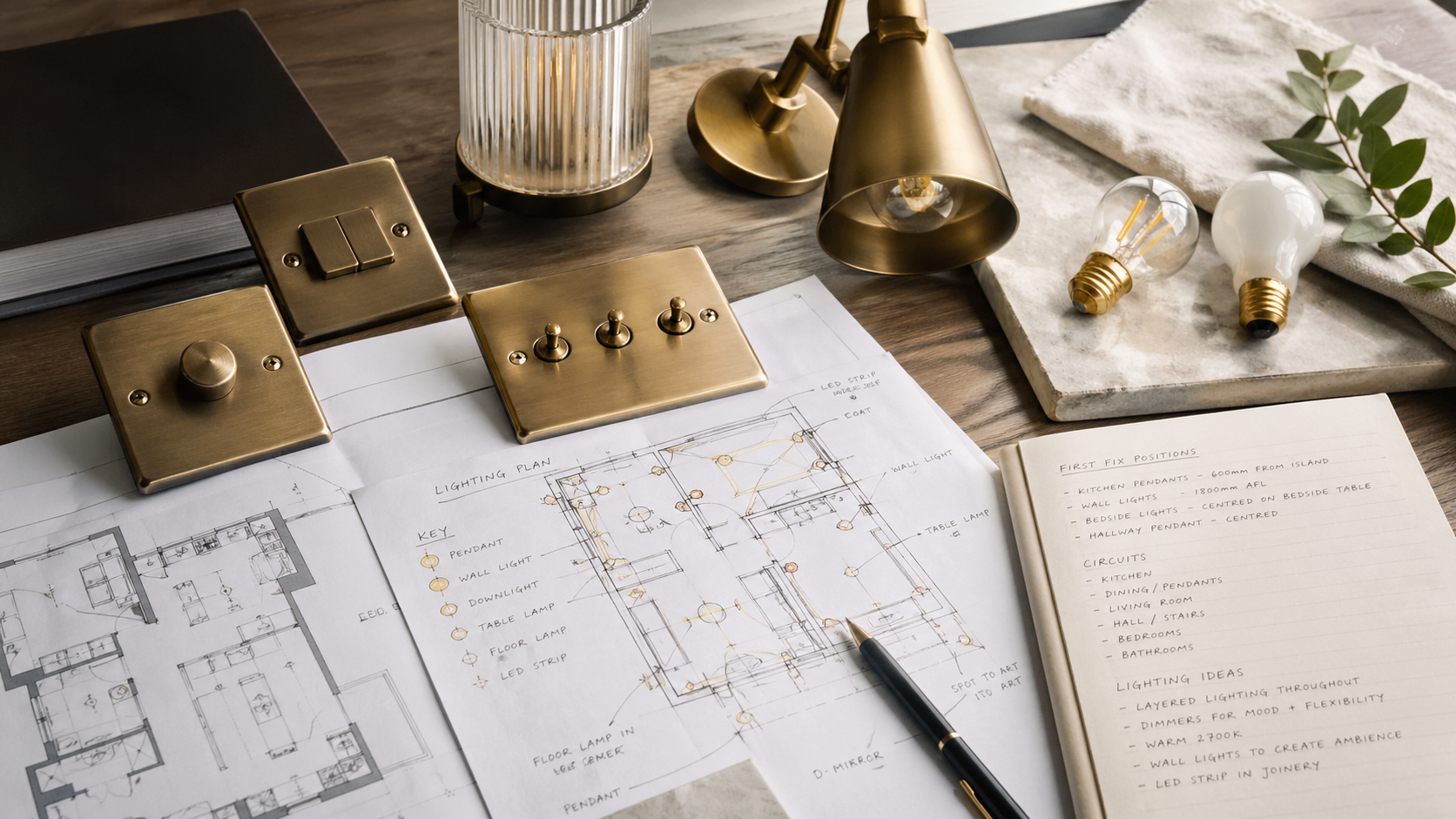
Lighting is not just about brightness. It is about how the room feels when you are living in it afterwards, what elements it highlights, and the atmosphere it creates.
Downlights have their place, but they are not the whole answer
Downlights are useful. I use them in my own home as well as in my lighting designs. I am not anti-downlight by any means.
But downlights do not, on their own, make for a successful lighting design scheme.
One particular memory I have from many years ago was when I was invited by a potential client to look at a home they had recently refurbished with a builder. It was a substantial Victorian home over five floors, however the kitchen was average-sized and had become a galley kitchen as part of a side-return extension.
The dining room was immediately adjacent to the new galley kitchen, and the builder had thought it perfectly acceptable to install 36 ceiling downlights in this kitchen/diner.
Thirty-six!
All on the same circuit!
So you were either blinded by the light or in perpetual darkness during the winter months.
A successful lighting scheme usually needs layers. So what does that mean exactly?
By layers of light, I mean that a kitchen might include some of the following:
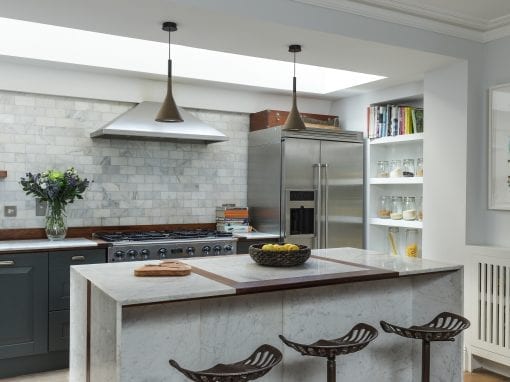
- under-cabinet task lighting over worktops
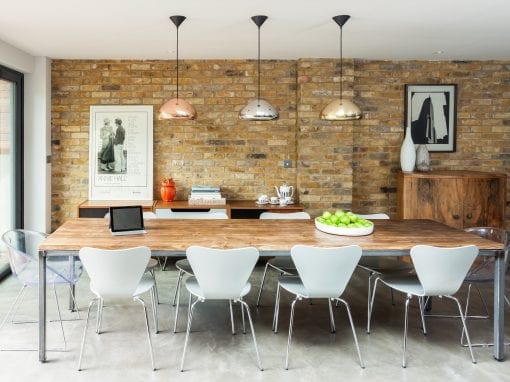
- pendants over an island
- directional downlights to highlight cabinetry details
- internal strip lights inside glass cabinets
- low-level LED strip or pin lights in the foot plinth
- wall lights to highlight a noticeboard or artwork
The aim is not to use every single type of lighting in every room. Nobody needs their cloakroom lit like the Royal Opera House.
However, the goal is to create flexibility for living in the space.
That is where layers matter. A successful result will be a carefully considered blend.
If you love your artwork, think about how it will be lit
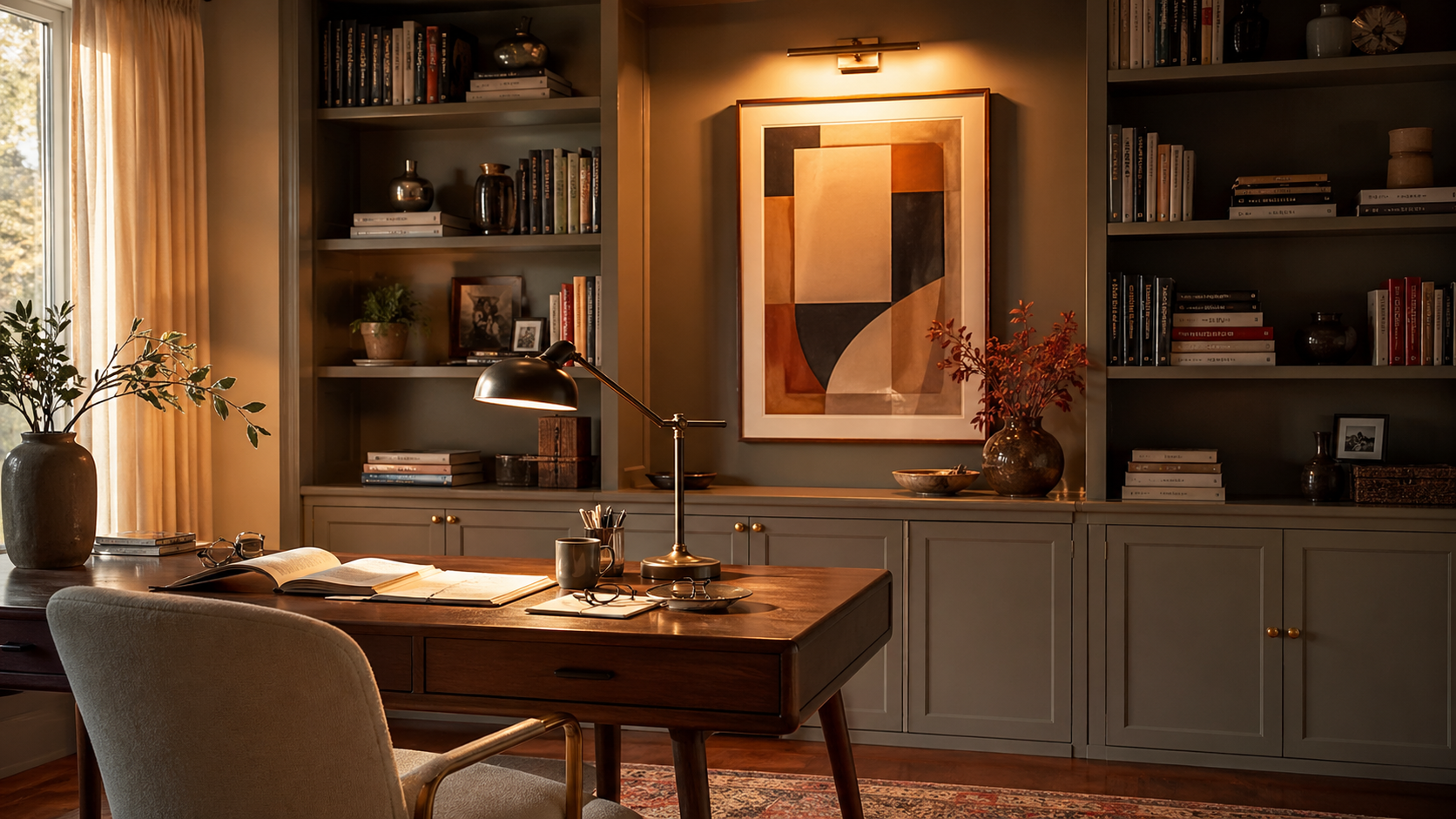
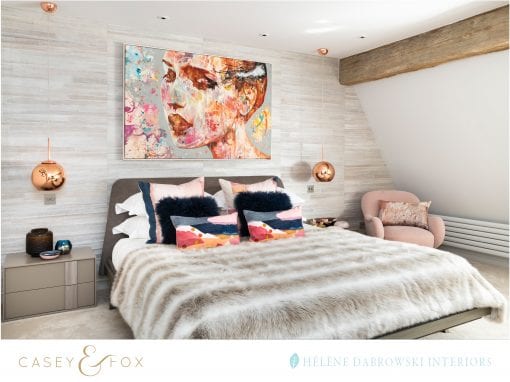
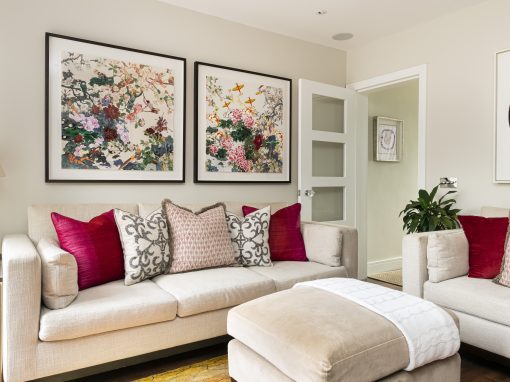
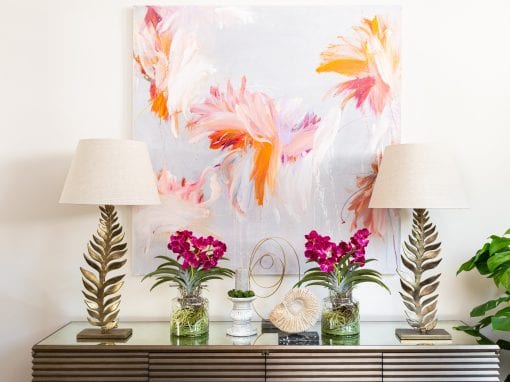
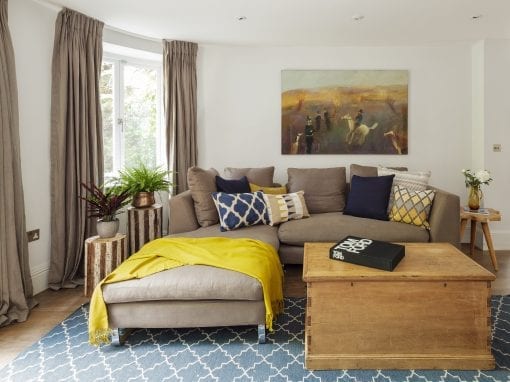
If you have artwork you love, especially larger pieces or pieces that help set the tone of a room, it is worth thinking about how they will be lit early on.
I once had a client who did not feel that lighting artwork was necessary. Their artwork was important to them, but lighting it was not seen as part of the plan.
The end result was frustrating. Once the project was finished, some pieces were half-lit by the edge of a downlight cone of light. Others were not lit at all. The artwork was there, but it was not being properly seen.
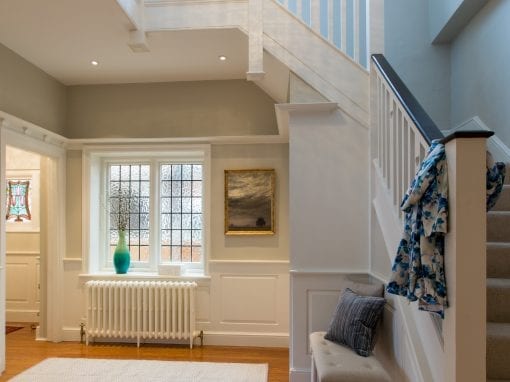
You may not know every single piece of artwork you will hang in the future, but you may know which walls are likely to matter. If there is an obvious chimney breast, hallway wall, stairwell, dining room wall or large blank space where artwork is likely to sit, plan for it.
Artwork should not have to take its chances under whatever light happens to land nearby.
Colour temperature matters
This is one of those slightly technical details that makes a very visible difference.
Every bulb has a colour temperature. This is measured in kelvin, shown as K on the bulb or fitting specification. Essentially, the lower the number, the warmer the colour of light. The higher the number, the cooler the colour of light.
For most UK residential interiors, I am usually looking at around 2700K for a warm, comfortable feel. In some kitchens, bathrooms or utility spaces, 3000K can work well if you want something a touch crisper while still feeling domestic.
What I am very cautious about in UK homes is using lightbulbs around 4000K. Unless there is a very specific reason for it, this can feel too cold and functional for residential spaces. In our winter months, this can really affect the mood as well.
In warmer countries, such as Australia or India, cooler light is often more commonly seen in residential homes, partly because the quality and intensity of natural light is different. But in the UK, particularly through long grey winters, colder lighting can quickly make a room feel clinical rather than comfortable.

So why does the colour of light matter?
Because you can choose beautiful wallpaper, tiles, worktops and fabrics, then completely change how they feel under the wrong light. A colour that looked rich and warm in natural daylight can suddenly feel flat or harsh under cold artificial lighting. Green can look grey. Beige can look pink.
This is especially important in open-plan spaces, where the kitchen, dining and sitting areas all need to feel connected but may require different levels of light at different times of day.
So yes, the bulb specification matters. This type of technical detail may not sound glamorous, however this is one of the primary elements that affects the final atmosphere of a room.
What do you need to think about before first fix?
You do not need every decorative fitting chosen, but you do need a sensible plan for how the room will function and feel.
A few useful questions to sit down and think about:
- Where do you want to be able to charge your phone?
Bedside, kitchen island, hallway console, study nook. These things sound small until you are living there. - Is this your forever-and-after house?
If so, what future-proofing is worth allowing for now? - Do you work from home?
If yes, then your home office, work area or router location is critical. Would it make sense for that electrical circuit to sit separately so the internet is not interrupted every time power needs to be killed elsewhere for future works? - Do you entertain outside?
If so, should you allow for both an outdoor power circuit and a separate outdoor lighting circuit? They are not the same thing, and putting the groundwork in now can save hassle later. - Where is the artwork likely to go?
You do not need the whole collection planned, but you may know which walls matter. - Do you want dimmers?
In most living spaces, dining spaces and bedrooms, they are very much worth considering. - Are the switches where you instinctively want to be able to turn things on and off?
Think about how you enter and leave the room, not just where it is convenient to run a cable.
This is not about making the project more complicated. It is about avoiding the sort of decisions that become expensive or annoying to change later.
I would always recommend that you ask your builder or electrician early on when the final lighting and electrical positions need to be agreed for first fix. Do not assume you can leave it until the end. By then, it can be too late to make changes.
Next in the series: budget
In the next post, I’ll be looking at another area where people often come unstuck: budget.
Because the builder’s quote is not the whole budget, however reassuringly official it may look, and the things that quietly fall outside it have a habit of showing up later with a very expensive face.
Coming next: Why your builder’s quote is not your whole refurb budget
Need help with lighting decisions?
If you are in the middle of a refurb and the lighting and electrical decisions are starting to pile up, my Build Survival Session was created for exactly this stage.
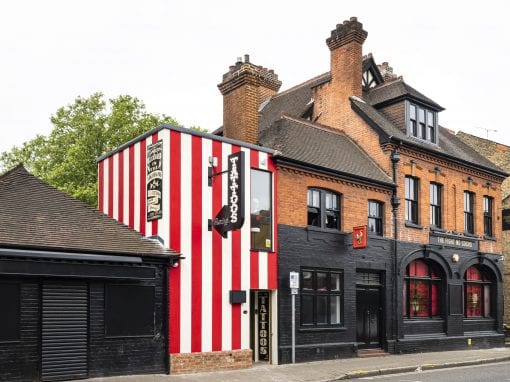
It is a focused in-depth online consultation where we look at what is already decided, what still needs thinking through, and how to move forward without ending up with a kitchen lit like McDonald’s or artwork left sulking in the dark.
You send me your plans, photos, videos and questions beforehand, then we work through the priorities together so you can make clearer, more confident decisions.
You also get four weeks of WhatsApp support afterwards, so when another lighting question pops up from site, you are not left trying to figure it out alone while the electrician waits for an answer.
Very useful if you are already mid-project.
Even more useful if your ceiling plan is starting to look suspiciously like an airport runway.
A little birthday offer
To celebrate 14 years of Casey & Fox, I’m offering
14% off your first online consultation
when it is booked and paid for
before midnight 30 April 2026.
The consultation itself does not need to take place in April.
It can be booked for any date up to 90 days from the date of booking.
Project Galleries