Tjukurrpa: The Dreaming – Experiencing Aboriginal Art in London
Stepping Into the Exhibition
Every so often, an exhibition stops you in your tracks. For me, it was Tjukurrpa: The Dreaming at Unit London, a show that brought together some of the most important Aboriginal artists of the 20th and 21st century.
Walking into the gallery, I felt that familiar surge of anticipation, the kind you get when you know you’re about to witness something extraordinary. The walls were alive with energy: vast canvases of pulsating colour, hypnotic dots, and sweeping gestures that seemed to vibrate with history.
But what struck me most wasn’t just the visual intensity. It was the sense of story, of something much older and deeper than paint on canvas.
As an interior designer, I’m constantly thinking about how art transforms a space. But this exhibition reminded me that art doesn’t just decorate, it anchors, it resonates, it connects us to something beyond ourselves. Aboriginal art has always fascinated me for exactly that reason. It isn’t simply “abstract” in the Western sense; it is narrative, memory, landscape, ancestry, all made visible.
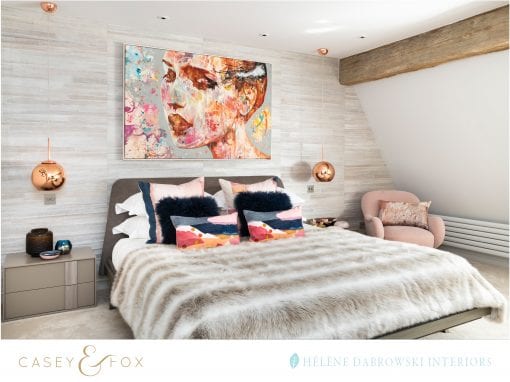
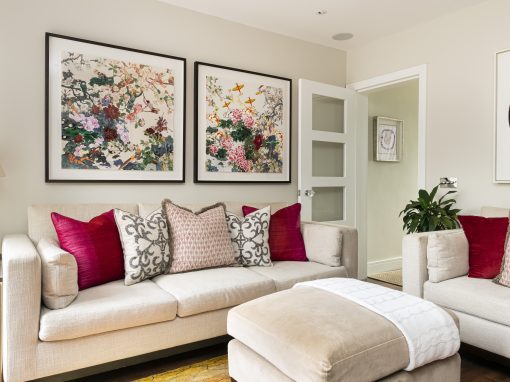
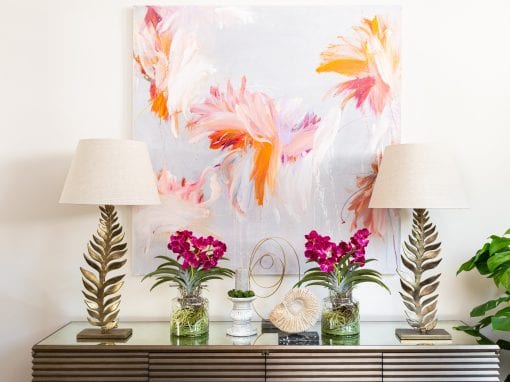
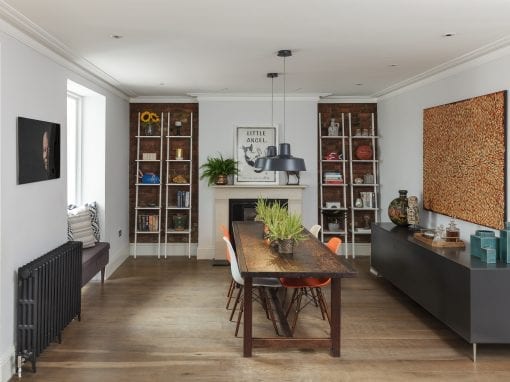
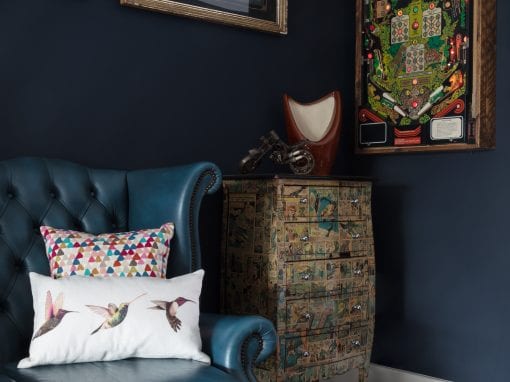
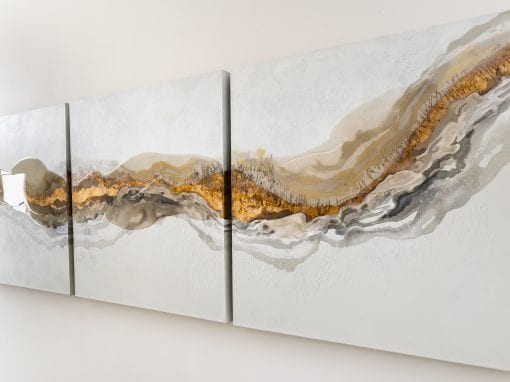
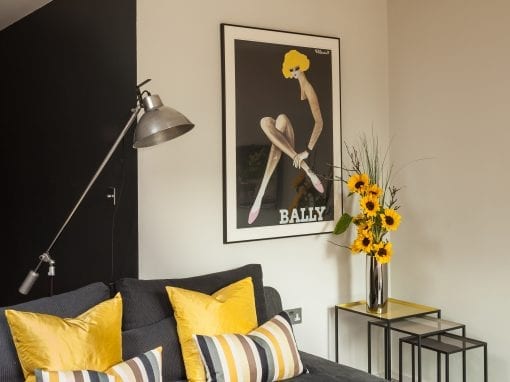
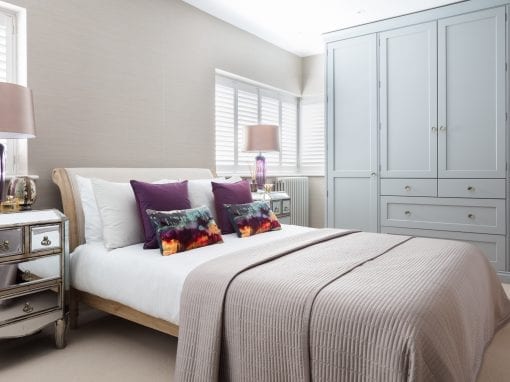
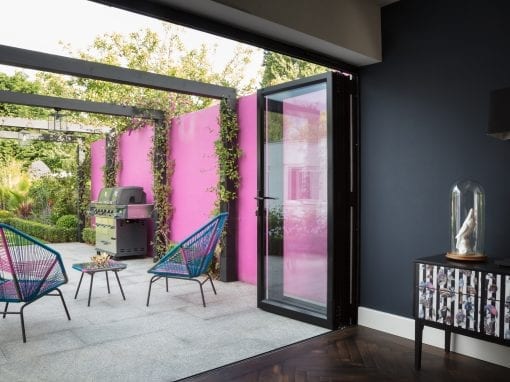
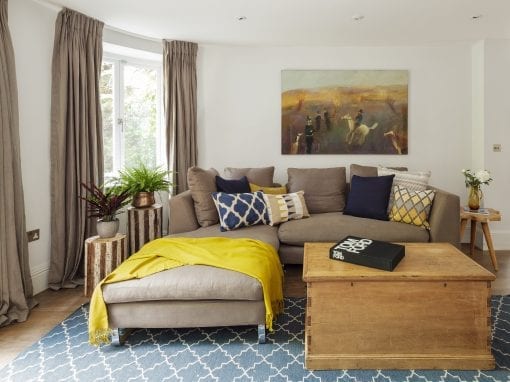
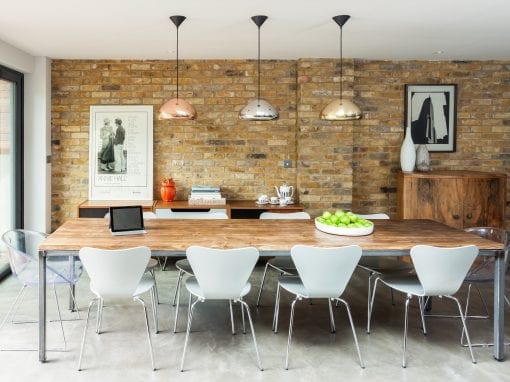
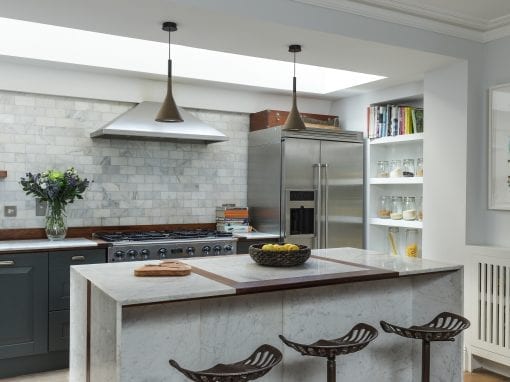
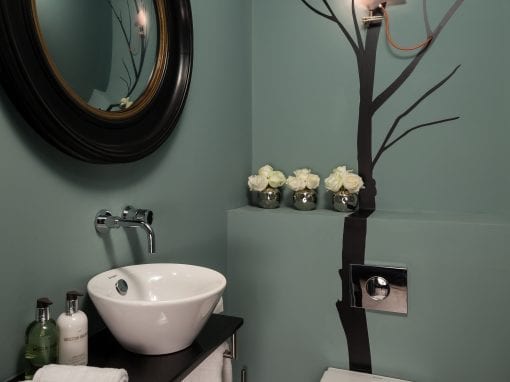
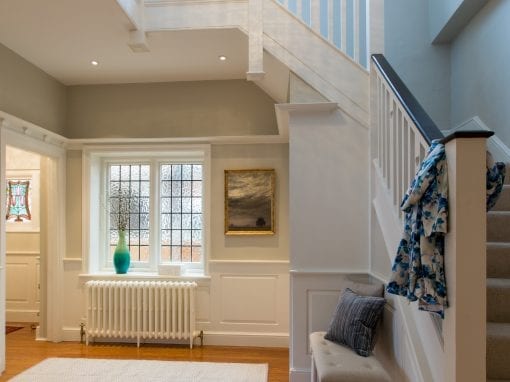
I’ve always believed art has the power to transform a space, you can see that in some of my past interior design projects
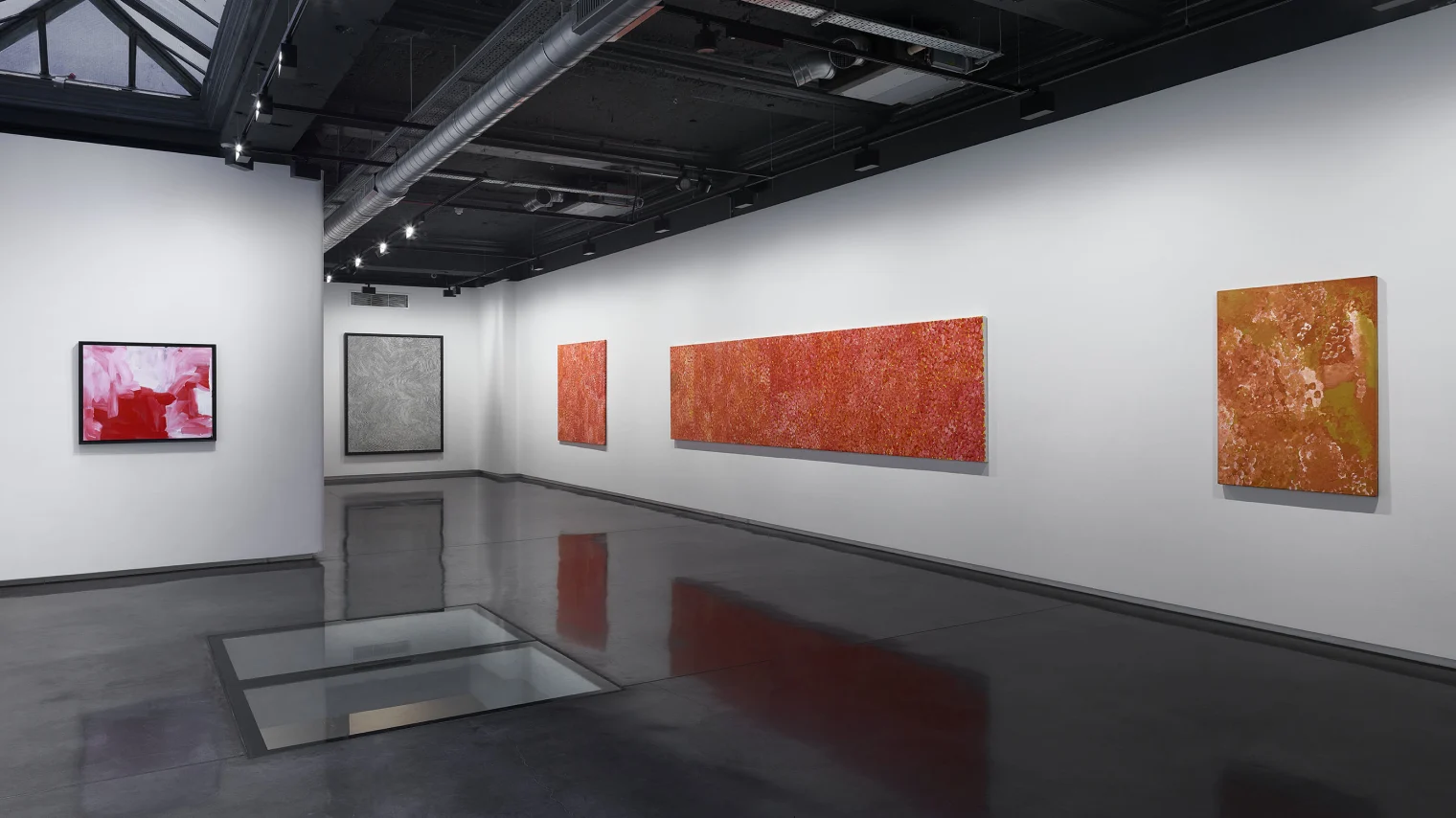
Unit London August 2025 | Tjukurrpa: The Dreaming
Cultural Warning
Aboriginal and Torres Strait Islander readers are advised that this article may contain images, names and references to people who have passed away.
I pay respect to Aboriginal and Torres Strait Islander peoples as the Traditional Custodians of Country in Australia, and to their enduring connections to land, culture and community. I extend my respects to Elders past and present.
What is Tjukurrpa / The Dreaming?
A living system, not a myth
The title of the exhibition, Tjukurrpa (pronounced chook-orr-pa), is often translated as “The Dreaming.” But that simple word doesn’t quite capture its depth. It isn’t just a story or a myth. It’s a living system of knowledge, law, and culture, a continuum where ancestral spirits shaped the land and remain present.
For Indigenous Australians, Tjukurrpa is embedded in every hill, waterhole, and desert track. It’s passed down through ceremony, song, and painting. Each artist in this exhibition wasn’t simply painting “from imagination”; they were visualising their connection to Country, story, and responsibility.
Why it resonates even in London
Standing in front of these works in a London gallery, thousands of miles from the deserts of Australia, felt just so surreal. And yet, you don’t need to decode every symbol to feel the power. The rhythm, colour, and repetition draw you in. They make you pause, breathe differently, and connect with something both universal and deeply rooted.
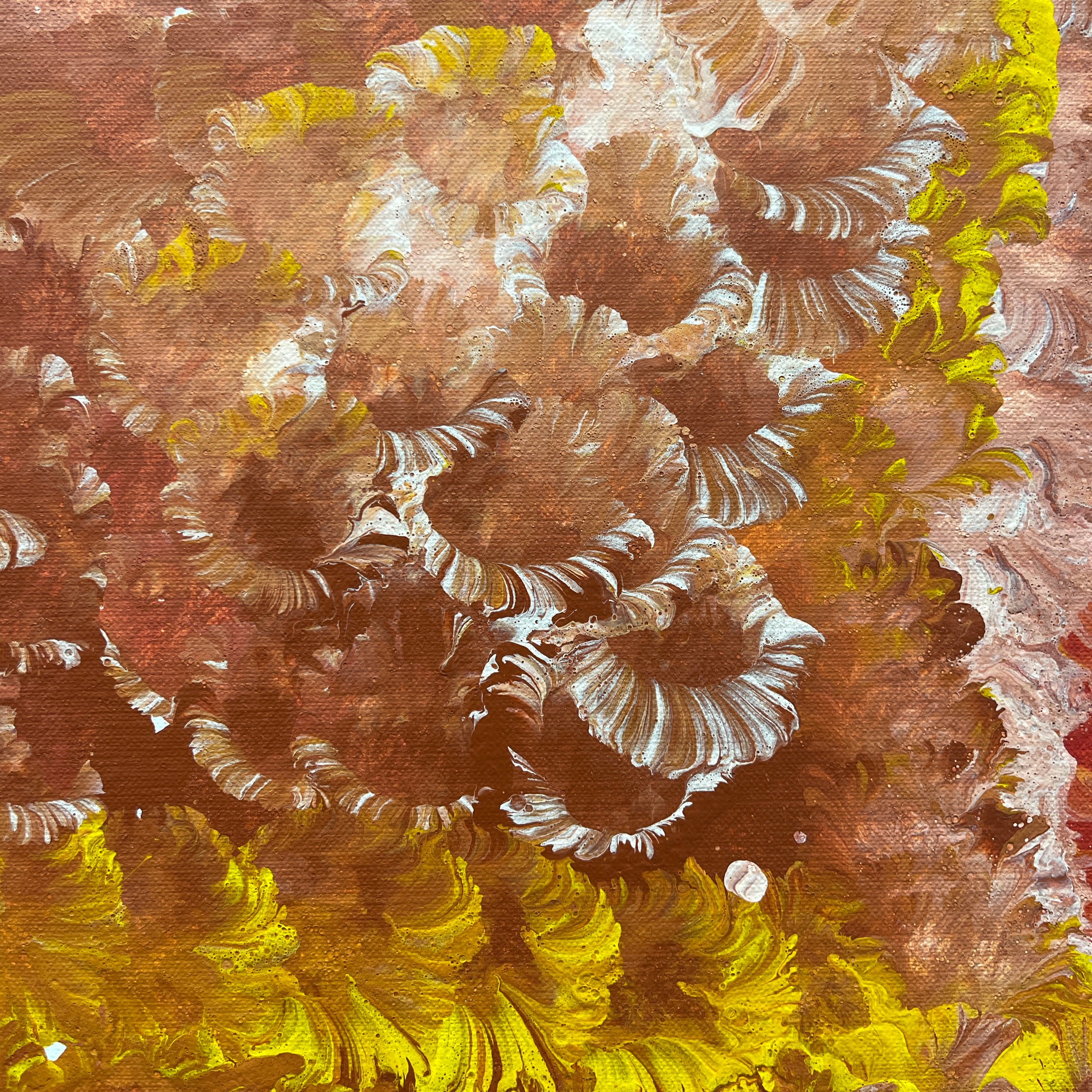
Highlights from the Exhibition
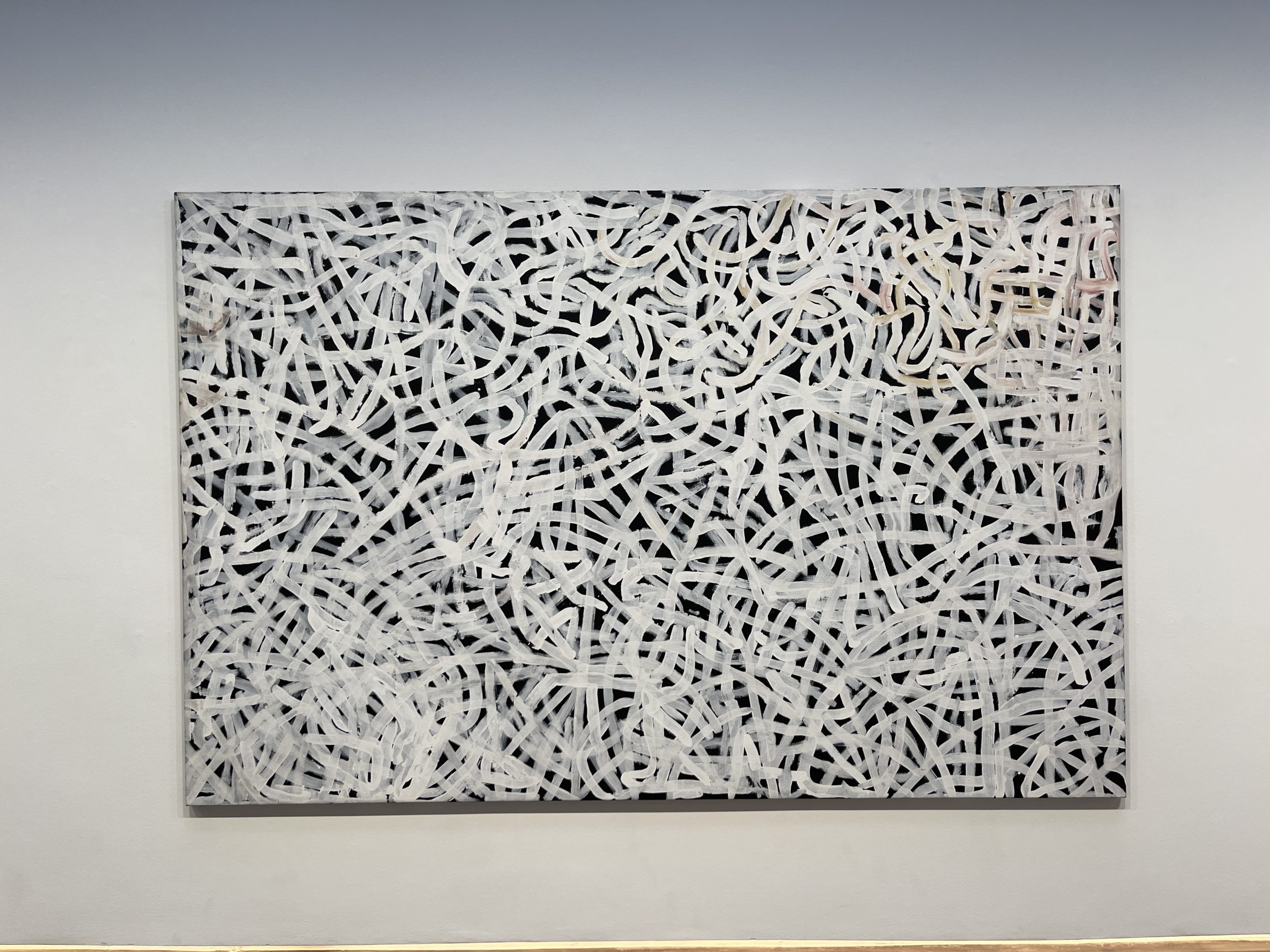
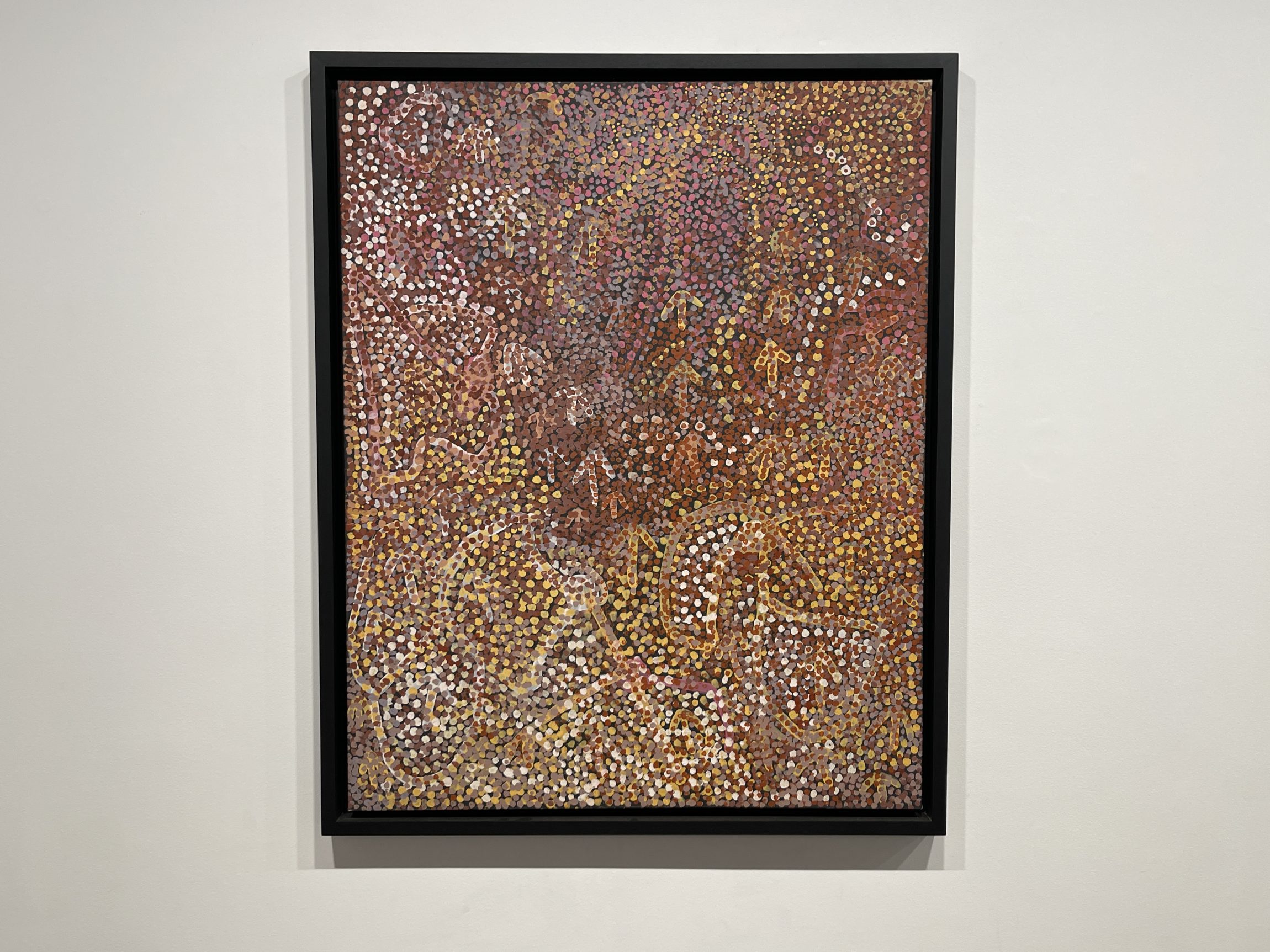
Emily Kam Kngwarray – Yam Dreaming alive on canvas
Emily Kam Kngwarray was a name I knew well before I arrived. Her Yam Dreaming paintings are extraordinary: sweeping webs of tangled roots that map both the plant itself and the ancestral journeys tied to it.
The energy is palpable. The paintings pulse with life, almost as if you could follow those yam roots underground. To imagine one of these canvases hanging in a London townhouse is to imagine the room itself vibrating with her rhythm.
Colour, rhythm, and geometry from other masters
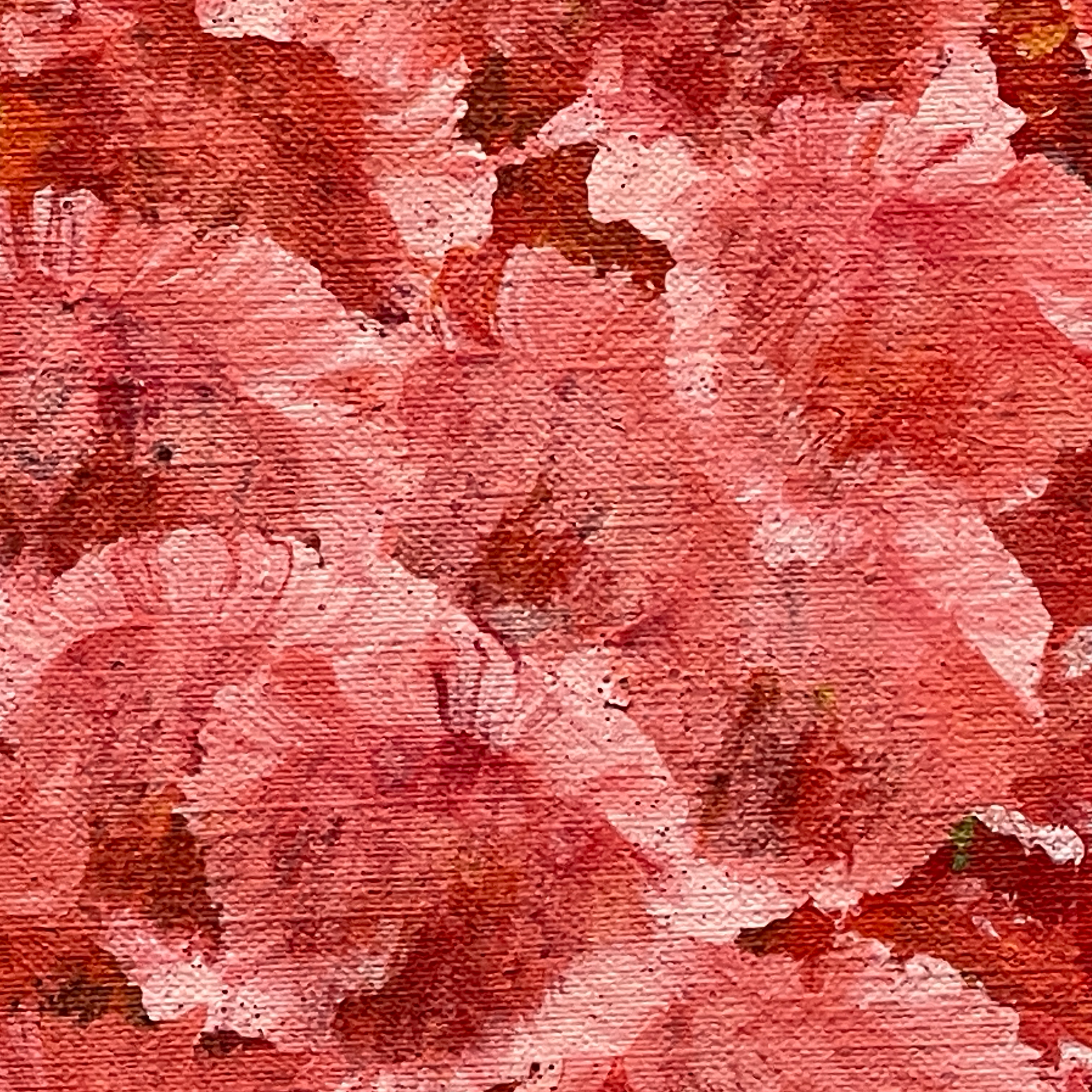
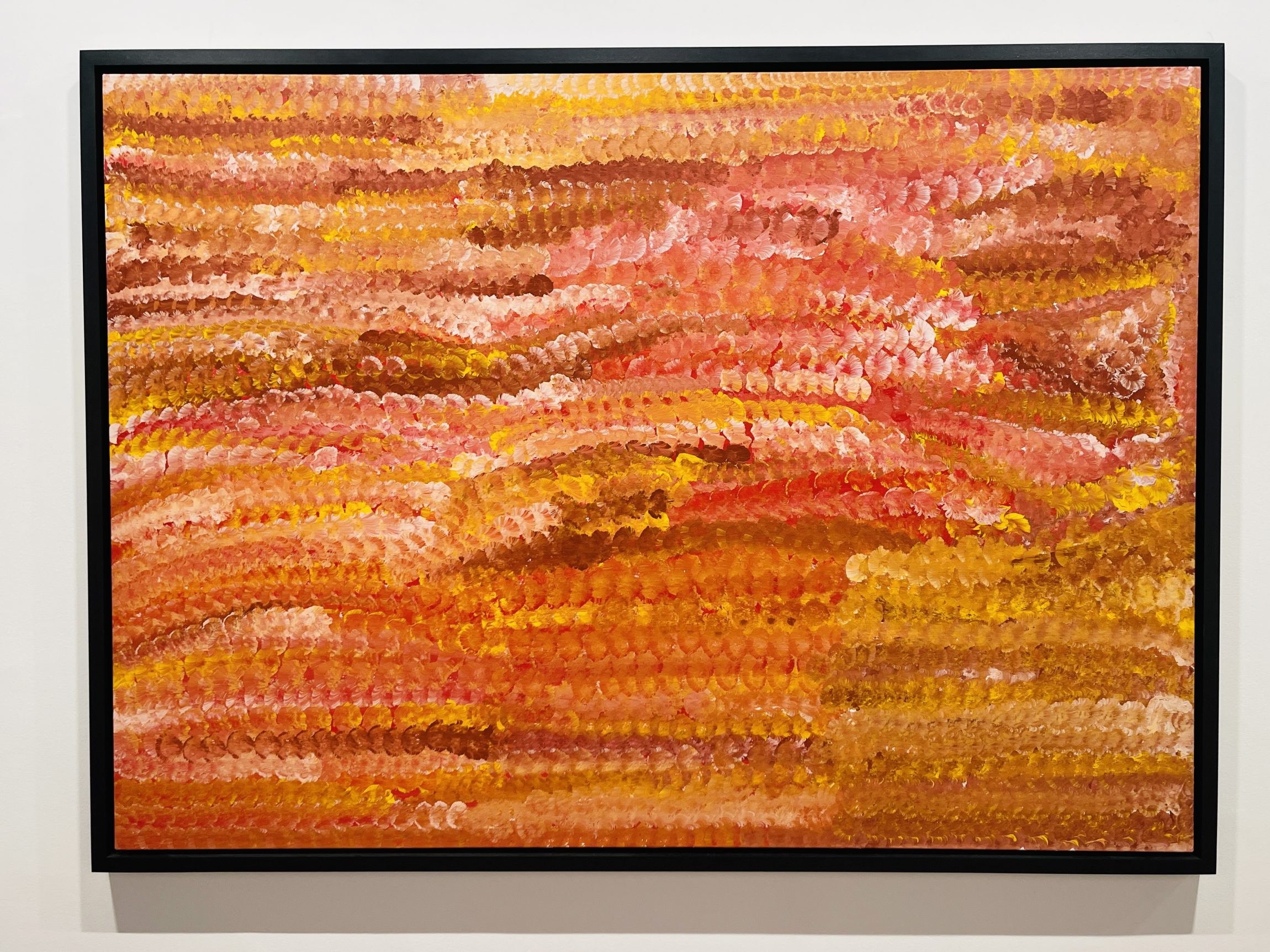
Tommy Watson Yannima’s Untju Alkata radiated deep crimsons and purples, with streaks of orange and white alive with movement — the surface shimmering like desert heat caught in paint. Standing before it, I felt both intensity and rhythm, as though the painting itself pulsed with the life of the land.
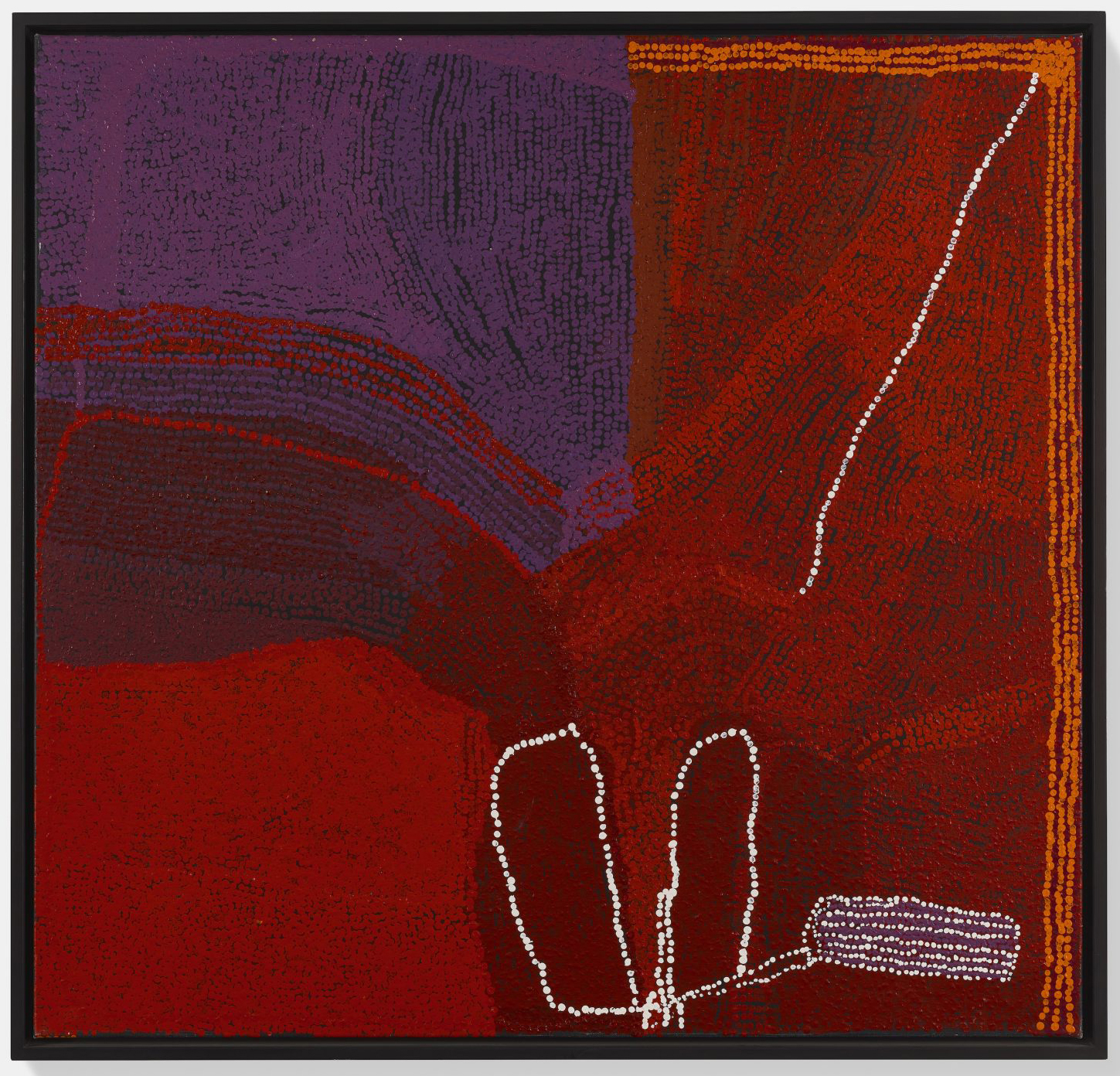
Untju Alkata by Tommy Watson Yannima
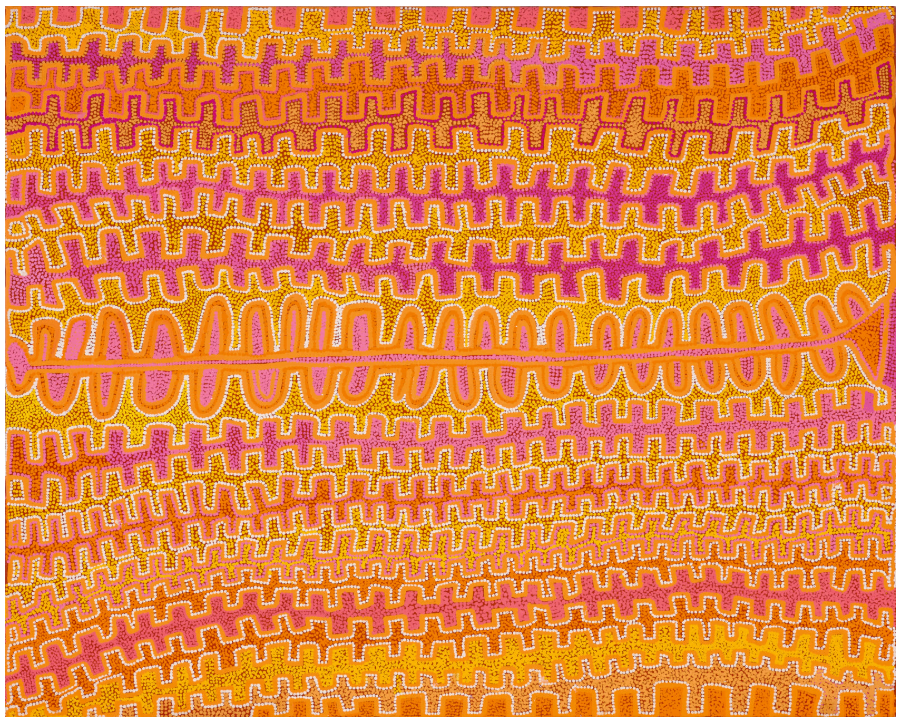
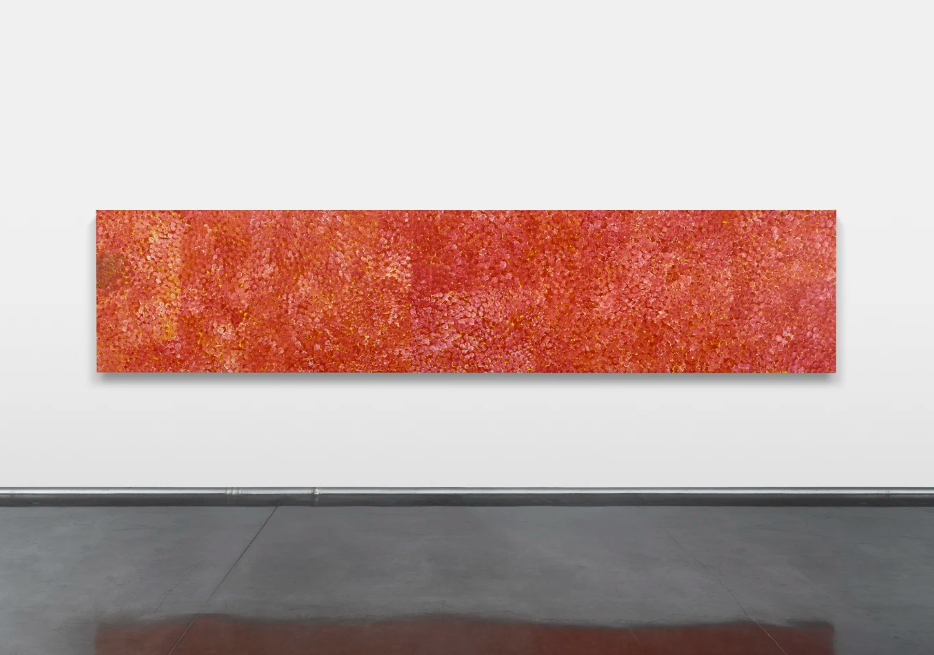
Untitled by Patrick Olodoodi Tjungurrayi
I didn’t actually see this work by Patrick in person — by the time I visited, it may already have sold, however it was part of the exhibition catalogue, and having seen some of his work in Australia in person last January (just wow!) I couldn’t resist including it here.
Patrick Olodoodi Tjungurrayi’s painting hums with energy. The interwoven bands of pink, orange, and gold create a sense of rhythm and movement that feels almost musical. Even from the page, it radiates warmth and vitality, capturing the pulse of Country in a way that’s too important not to share.
Warlimpirrnga Tjapaltjarri’s dotted geometric patterns hypnotised me into stillness every line alive with vibration.
Together, the artists formed a chorus. Different palettes, different languages, yet the same resonance.

Why This Exhibition Matters
Aboriginal art as contemporary art
What Unit London did brilliantly was present these works not as “ethnographic objects” but as contemporary art. That distinction matters. Too often, Aboriginal art has been placed in the category of “anthropology” rather than given equal standing in the contemporary art world.
Seeing these canvases hung with the same respect given to any major contemporary painter was powerful. They belong here. They belong everywhere.
A landmark moment in London’s cultural calendar
This was more than just an exhibition. It was a cultural moment — one that asked London audiences to see Aboriginal art not as distant or “other,” but as relevant, vital, and globally significant.
For me personally, it was also a reminder of why I bring art into my projects. Because art isn’t decorative. It’s connective. It holds weight. It tells stories.
Visual Storytelling and Inspiration
Capturing the experience in photos and video
I took countless photos and short clips — though, as always, they don’t quite capture the atmosphere. Still, they let me carry fragments of the exhibition home and share them with you here. If you’d like to immerse yourself further, Unit London has also released a beautiful film of the show (I’m currently seeking permission to repost it).
How Aboriginal art sparks design ideas
As a interior designer, I couldn’t help but think about colour palettes, rhythms, and placement. Imagine Patrick Olodoodi Tjungurrayi’s hot pinks against a cool grey London wall — the entire room would shift in temperature. Or Warlimpirrnga Tjapaltjarri’s intricate dots setting the pace in a modern Beckenham home.
Art isn’t an “add-on.” It should never be the afterthought you tack on because “something needs to go there.” It’s the heartbeat of a space. The right piece sets the rhythm, the mood, the soul of a home. My own would feel utterly empty without my favourite works — many of which, unsurprisingly, are Aboriginal.
Reflections to Take Home
Leaving the gallery, I felt both exhilarated and grounded. Exhilarated by the sheer force of colour and energy; grounded by the reminder that art is story, connection, and responsibility.
In my own work, I often encourage clients to invest in pieces that mean something — works that speak beyond trend or season. This exhibition was a masterclass in that philosophy.
You’ll find more detail in the exhibition catalogue, which I’ve embedded below as a flipbook.
Inspired? Let’s Talk About Art for Your Home
Project Galleries